Introduction
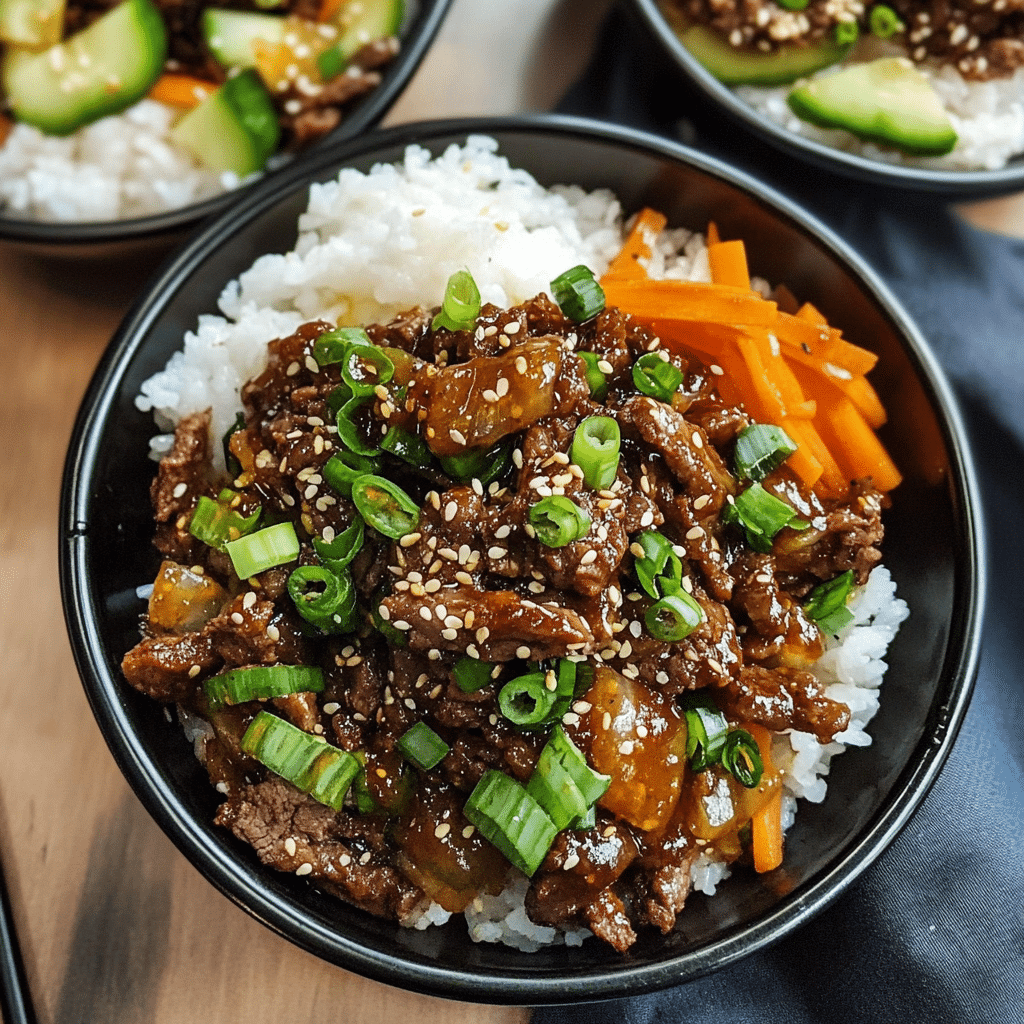
If you’re a fan of bold, savory flavors with a touch of sweetness, Korean Beef Bowls should be your next go-to meal. This hearty and satisfying dish is inspired by the rich and flavorful cuisine of Korea, featuring tender beef cooked in a sweet and savory sauce, served over a bed of steamed rice, and garnished with fresh vegetables. Whether you’re looking for a quick weeknight dinner or a meal that will impress your guests, Korean Beef Bowls are versatile, customizable, and easy to prepare.
The beauty of Korean Beef Bowls lies in their ability to balance a variety of flavors and textures—sweet, salty, savory, and spicy—creating a dish that is both comforting and exciting to eat. The dish typically uses bulgogi (marinated beef) or ground beef, which is cooked in a flavorful sauce made of soy sauce, sesame oil, garlic, ginger, and brown sugar. When paired with soft rice, crunchy vegetables, and a few tasty garnishes, it becomes a meal that is hard to beat.
In this article, we’ll delve into why Korean Beef Bowls are such a fantastic meal, guide you through the process of making them, and provide you with tips, variations, and serving suggestions to make the dish your own. Plus, we’ve ensured this recipe is completely halal, free from pork, bacon, and wine, so everyone can enjoy it.
Why You’ll Love This Recipe
- Flavor Explosion: Korean Beef Bowls bring a delightful combination of sweet, savory, and umami flavors with the rich taste of beef and the tangy kick from sauces like soy sauce and sesame oil.
- Quick and Easy: With a cooking time of under 30 minutes, this recipe is perfect for busy nights when you want something delicious without spending hours in the kitchen.
- Customizable: You can adjust the level of spiciness, swap in different vegetables, or even use a different protein if you prefer something other than beef.
- Healthy and Balanced: The dish features lean protein, fresh vegetables, and fiber-rich rice, making it a well-rounded, nutritious meal.
- Halal Friendly: This recipe is completely halal, ensuring it meets dietary restrictions for those who follow halal practices. No pork, bacon, or wine involved!
Preparation Time and Servings
- Total Time: 30 minutes (10 minutes for prep, 20 minutes for cooking)
- Servings: This recipe serves 4 people.
- Nutrition Facts (per serving): Calories: 450, Protein: 28g, Carbs: 50g, Fat: 15g.
Ingredients
Beef:
- 1 lb ground beef: Ground beef is ideal for this recipe because it cooks quickly and absorbs the flavorful sauce. You can also use thinly sliced beef (like flank steak or ribeye) if you prefer a more traditional bulgogi-style dish.
- 1 tablespoon sesame oil: Adds a deep, nutty flavor to the beef.
- 2 teaspoons fresh ginger, minced: For a zesty and aromatic punch.
- 2 garlic cloves, minced: A classic flavor that pairs beautifully with beef and soy sauce.
- 1 tablespoon soy sauce: This salty base ingredient adds depth to the sauce.
- 1 tablespoon oyster sauce: Adds a savory, umami flavor (ensure it’s halal, or substitute with more soy sauce).
- 1 tablespoon brown sugar: Adds a touch of sweetness to balance the savory and salty flavors.
- 1 tablespoon rice vinegar: Provides acidity to brighten the sauce and balance the sweetness.
- 1 teaspoon chili paste (optional): For a kick of spice, adjust to your heat preference.
Garnish:
- 2 green onions, chopped: Adds freshness and a mild onion flavor.
- 1 tablespoon sesame seeds: For a crunchy, nutty finish.
- 1 cucumber, sliced: For a refreshing crunch and slight bitterness to balance the richness of the beef.
- 1 carrot, julienned: Adds color, texture, and a mild sweetness.
- Kimchi (optional): For a traditional Korean touch, kimchi adds a spicy, fermented flavor that complements the beef.
- Sriracha or gochujang (Korean chili paste): For those who enjoy extra spice, drizzle on a bit of sriracha or gochujang.
Rice:
- 2 cups jasmine rice: Jasmine rice has a subtle fragrance and a soft, fluffy texture that pairs perfectly with the flavorful beef. You can use other types of rice if preferred.
- 4 cups water: For cooking the rice.
Step-by-Step Preparation
FIRST STEP: PREPARE THE RICE
- Cook the Rice: Begin by cooking the rice. Rinse the rice under cold water until the water runs clear to remove excess starch. This step helps make the rice fluffier.
- Simmer the Rice: In a medium saucepan, add the rinsed rice and 4 cups of water. Bring it to a boil over medium-high heat, then reduce the heat to low, cover, and let it simmer for about 18-20 minutes, or until the rice is tender and the water has been absorbed. Remove from heat and let it sit, covered, for 5 minutes before fluffing it with a fork.
SECOND STEP: COOK THE BEEF
- Sauté the Aromatics: In a large skillet or wok, heat 1 tablespoon of sesame oil over medium-high heat. Add the minced garlic and ginger, and sauté for about 1-2 minutes until fragrant.
- Cook the Beef: Add the ground beef to the pan. Use a wooden spoon or spatula to break it apart as it cooks. Stir occasionally until the beef is fully browned and cooked through, about 5-7 minutes. If you’re using sliced beef instead of ground beef, cook it for 2-3 minutes until tender and slightly browned.
- Add the Sauce Ingredients: Once the beef is cooked, add 1 tablespoon soy sauce, 1 tablespoon oyster sauce, 1 tablespoon brown sugar, 1 tablespoon rice vinegar, and chili paste (if using). Stir everything together and let it simmer for 3-4 minutes until the sauce thickens slightly and coats the beef. Taste the sauce and adjust the seasoning as needed, adding more soy sauce for saltiness or more sugar for sweetness.
THIRD STEP: PREPARE THE GARNISHES
- Prepare the Vegetables: While the beef cooks, prepare the garnishes. Slice the cucumber into thin rounds, julienne the carrot, and chop the green onions into small pieces. Set them aside.
- Toast the Sesame Seeds: In a small, dry skillet over medium heat, toast the sesame seeds for 1-2 minutes until lightly browned. This will bring out their nutty flavor and make them a perfect finishing touch for the bowls.
FOURTH STEP: ASSEMBLE THE BOWLS
- Plate the Rice: Start by spooning a generous serving of jasmine rice into each bowl. The rice serves as the base for your Korean Beef Bowls.
- Top with Beef: Spoon the cooked beef mixture over the rice, ensuring it’s evenly distributed.
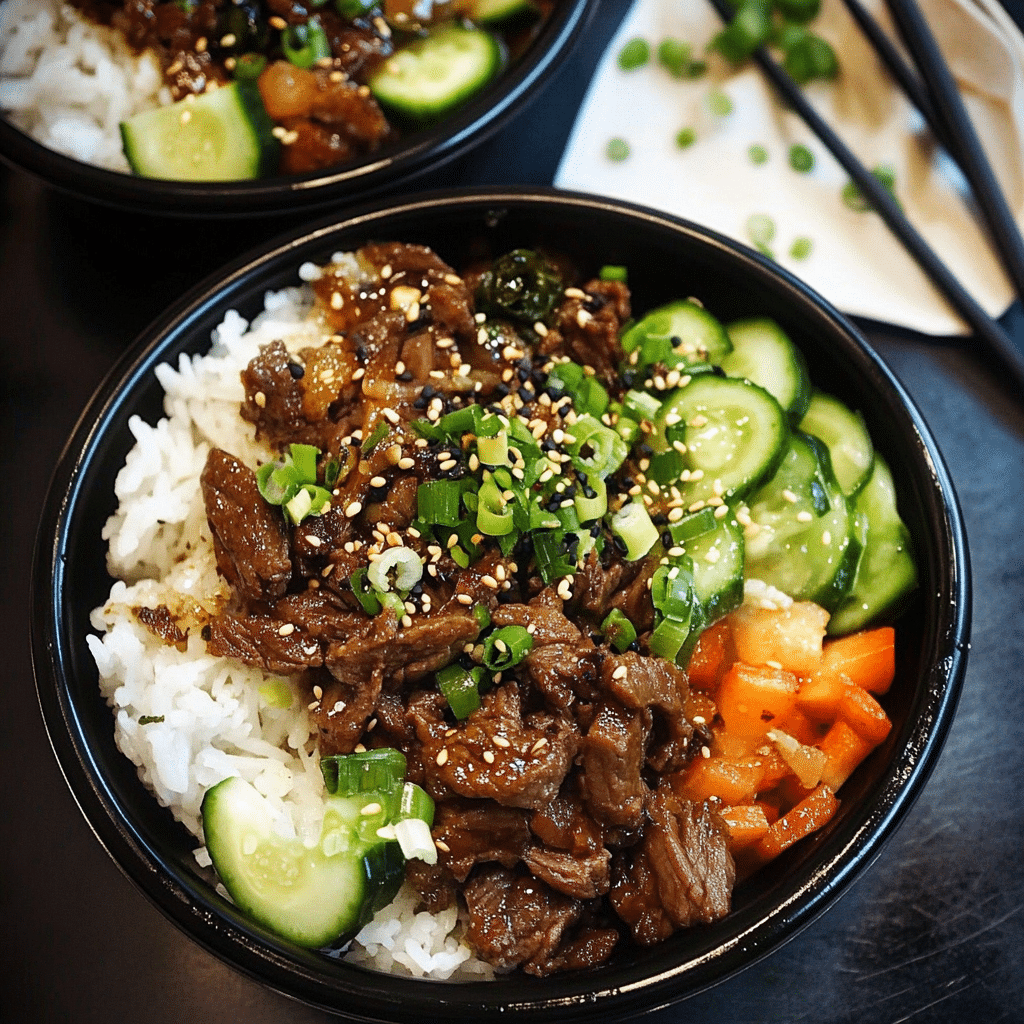
- Add the Garnishes: Top the beef with the sliced cucumber, julienned carrots, and chopped green onions. Sprinkle with toasted sesame seeds and, if you like, drizzle with a bit of sriracha or gochujang for extra heat.
- Optional: Add Kimchi: For a more authentic Korean experience, serve the bowls with a side of kimchi. The spicy, fermented flavors of kimchi pair wonderfully with the sweet and savory beef.
FINAL STEP: SERVE AND ENJOY
Serve the Korean Beef Bowls immediately, while the beef is still warm, and enjoy this delicious, flavorful meal. The combination of tender beef, soft rice, fresh vegetables, and the umami-rich sauce is sure to satisfy your taste buds.
How to Serve Korean Beef Bowls
Korean Beef Bowls are a versatile dish that can be served in various ways to suit different occasions and preferences. Here are some great serving ideas:
1. For a Weeknight Dinner
Korean Beef Bowls are quick to make, requiring just 30 minutes to prepare. This makes them an ideal option for a busy weeknight meal when you want something satisfying but don’t have a lot of time to spend in the kitchen.
2. For a Family Meal
This recipe serves 4 people, making it perfect for a family dinner. The ingredients are simple and wholesome, making it a family-friendly meal that everyone will love. You can also customize the toppings for each family member’s preferences.
3. Meal Prep
Korean Beef Bowls are a great choice for meal prep. Prepare the beef mixture and rice in advance, then store them in separate containers in the refrigerator. When you’re ready to eat, simply reheat the beef and rice and assemble the bowls with your favorite garnishes.
4. For a Party or Gathering
These bowls are also great for casual parties or gatherings. Set up a “build-your-own-bowl” station with the rice, beef, and a variety of toppings like sliced vegetables, kimchi, and sauces. Guests can customize their bowls to their liking, making it a fun and interactive meal.
Additional Tips
- Use Lean Beef: For a healthier version, opt for lean ground beef (90% lean or higher) or use thinly sliced lean cuts of beef like sirloin.
- Adjust the Spice Level: If you prefer
a milder version, you can skip the chili paste or reduce the amount of sriracha. For extra heat, add more chili paste or serve with spicy kimchi. 3. Vegetarian Version: Replace the beef with tofu or tempeh for a plant-based version. Simply cube the tofu and sauté it with the garlic and ginger, then add the sauce. 4. Make it Gluten-Free: To make the recipe gluten-free, use tamari or coconut aminos instead of soy sauce, and make sure your oyster sauce is gluten-free.
Recipe Variations
While Korean Beef Bowls are fantastic as written, there are plenty of ways to customize them to your taste:
1. Use Different Proteins
Try using ground chicken, turkey, or even lamb in place of the beef. Each protein brings its own unique flavor and texture to the dish.
2. Add More Vegetables
Feel free to add more vegetables like bell peppers, spinach, or edamame to the bowls for added nutrition and flavor.
3. Make it Spicy
If you love spice, try adding a few chopped Thai bird’s eye chilies or a dash of gochujang (Korean chili paste) for an authentic spicy kick.
4. Use Brown Rice
For a healthier twist, swap white jasmine rice for brown rice. Brown rice adds extra fiber and nutrients, making the dish even more filling.
Freezing and Storage
Korean Beef Bowls are easy to store and reheat. After cooking, let the beef and rice cool completely, then transfer them to airtight containers. Store in the refrigerator for up to 3 days.
To reheat, simply microwave the beef and rice together for 1-2 minutes until warmed through. Alternatively, reheat on the stovetop over low heat.
You can also freeze the cooked beef mixture for up to 3 months. When ready to eat, thaw it in the refrigerator overnight and reheat it on the stove.
Special Equipment
While you don’t need any specialized equipment for Korean Beef Bowls, a few essentials can make your cooking process smoother:
- Large Skillet or Wok: Perfect for sautéing the beef and aromatics.
- Rice Cooker: If you make rice often, a rice cooker can make the process easier and ensure perfect rice every time.
- Cutting Board and Knife: For prepping vegetables and garnishes.
Frequently Asked Questions
1. Can I use a different type of beef?
Yes, you can use thinly sliced beef like flank steak or ribeye for a more traditional bulgogi-style dish. Just cook it quickly to keep it tender.
2. Can I make Korean Beef Bowls in advance?
Yes! You can make the beef mixture and rice ahead of time. Store them in separate containers in the refrigerator and reheat when ready to serve.
3. What can I use instead of sesame oil?
If you don’t have sesame oil, you can use vegetable oil, but it won’t provide the same depth of flavor. You can also try peanut oil for a slight nutty taste.
4. Can I make this dish vegetarian?
Yes! Simply swap the beef for tofu, tempeh, or even a plant-based meat alternative for a vegetarian or vegan version.
Print
Korean Beef Bowls
- Total Time: 30 minutes
Ingredients
For the Beef:
- 1 lb ground beef: Ground beef is ideal for this recipe because it cooks quickly and absorbs the flavorful sauce. You can also use thinly sliced beef (like flank steak or ribeye) if you prefer a more traditional bulgogi-style dish.
- 1 tablespoon sesame oil: Adds a deep, nutty flavor to the beef.
- 2 teaspoons fresh ginger, minced: For a zesty and aromatic punch.
- 2 garlic cloves, minced: A classic flavor that pairs beautifully with beef and soy sauce.
- 1 tablespoon soy sauce: This salty base ingredient adds depth to the sauce.
- 1 tablespoon oyster sauce: Adds a savory, umami flavor (ensure it’s halal, or substitute with more soy sauce).
- 1 tablespoon brown sugar: Adds a touch of sweetness to balance the savory and salty flavors.
- 1 tablespoon rice vinegar: Provides acidity to brighten the sauce and balance the sweetness.
- 1 teaspoon chili paste (optional): For a kick of spice, adjust to your heat preference.
For the Garnish:
- 2 green onions, chopped: Adds freshness and a mild onion flavor.
- 1 tablespoon sesame seeds: For a crunchy, nutty finish.
- 1 cucumber, sliced: For a refreshing crunch and slight bitterness to balance the richness of the beef.
- 1 carrot, julienned: Adds color, texture, and a mild sweetness.
- Kimchi (optional): For a traditional Korean touch, kimchi adds a spicy, fermented flavor that complements the beef.
- Sriracha or gochujang (Korean chili paste): For those who enjoy extra spice, drizzle on a bit of sriracha or gochujang.
For the Rice:
- 2 cups jasmine rice: Jasmine rice has a subtle fragrance and a soft, fluffy texture that pairs perfectly with the flavorful beef. You can use other types of rice if preferred.
- 4 cups water: For cooking the rice.
Instructions
FIRST STEP: PREPARE THE RICE
- Cook the Rice: Begin by cooking the rice. Rinse the rice under cold water until the water runs clear to remove excess starch. This step helps make the rice fluffier.
- Simmer the Rice: In a medium saucepan, add the rinsed rice and 4 cups of water. Bring it to a boil over medium-high heat, then reduce the heat to low, cover, and let it simmer for about 18-20 minutes, or until the rice is tender and the water has been absorbed. Remove from heat and let it sit, covered, for 5 minutes before fluffing it with a fork.
SECOND STEP: COOK THE BEEF
- Sauté the Aromatics: In a large skillet or wok, heat 1 tablespoon of sesame oil over medium-high heat. Add the minced garlic and ginger, and sauté for about 1-2 minutes until fragrant.
- Cook the Beef: Add the ground beef to the pan. Use a wooden spoon or spatula to break it apart as it cooks. Stir occasionally until the beef is fully browned and cooked through, about 5-7 minutes. If you’re using sliced beef instead of ground beef, cook it for 2-3 minutes until tender and slightly browned.
- Add the Sauce Ingredients: Once the beef is cooked, add 1 tablespoon soy sauce, 1 tablespoon oyster sauce, 1 tablespoon brown sugar, 1 tablespoon rice vinegar, and chili paste (if using). Stir everything together and let it simmer for 3-4 minutes until the sauce thickens slightly and coats the beef. Taste the sauce and adjust the seasoning as needed, adding more soy sauce for saltiness or more sugar for sweetness.
THIRD STEP: PREPARE THE GARNISHES
- Prepare the Vegetables: While the beef cooks, prepare the garnishes. Slice the cucumber into thin rounds, julienne the carrot, and chop the green onions into small pieces. Set them aside.
- Toast the Sesame Seeds: In a small, dry skillet over medium heat, toast the sesame seeds for 1-2 minutes until lightly browned. This will bring out their nutty flavor and make them a perfect finishing touch for the bowls.
FOURTH STEP: ASSEMBLE THE BOWLS
- Plate the Rice: Start by spooning a generous serving of jasmine rice into each bowl. The rice serves as the base for your Korean Beef Bowls.
- Top with Beef: Spoon the cooked beef mixture over the rice, ensuring it’s evenly distributed.
- Add the Garnishes: Top the beef with the sliced cucumber, julienned carrots, and chopped green onions. Sprinkle with toasted sesame seeds and, if you like, drizzle with a bit of sriracha or gochujang for extra heat.
- Optional: Add Kimchi: For a more authentic Korean experience, serve the bowls with a side of kimchi. The spicy, fermented flavors of kimchi pair wonderfully with the sweet and savory beef.
FINAL STEP: SERVE AND ENJOY
Serve the Korean Beef Bowls immediately, while the beef is still warm, and enjoy this delicious, flavorful meal. The combination of tender beef, soft rice, fresh vegetables, and the umami-rich sauce is sure to satisfy your taste buds.
Nutrition
- Serving Size: 4
- Calories: 450
- Fat: 15g
- Carbohydrates: 50g
- Protein: 28g
Conclusion
Korean Beef Bowls are a quick, flavorful, and satisfying meal that brings the best of Korean cuisine to your dinner table. The combination of tender beef, savory sauce, and fresh vegetables makes this dish both hearty and nutritious. Whether you’re cooking for a family dinner, meal prepping for the week, or looking for a dish to impress your guests, Korean Beef Bowls are sure to hit the spot. Give this halal-friendly recipe a try, and enjoy the mouthwatering flavors of Korea in the comfort of your home!